

Hosting a buffet often feels like a high-stakes balancing act: you want that “Instagrammable” aesthetic, but you don’t want to spend 48 hours in the kitchen placing microgreens with tweezers. Most hosts make the mistake of overcomplicating the menu, which leads to exhaustion and a cluttered table.
The secret to an unforgettable themed table isn’t exotic ingredients; it’s logic, accessibility, and one standout anchor. Here is your step-by-step guide to building a snack table that guests will rave about long after the last olive is gone—without breaking a sweat.
1. Buffet Readability: Navigation for Eyes and Stomachs
The worst thing that can happen at a party is “visual noise.” When a guest stands before a plate and can’t tell if they’re looking at a spicy pâté or a chocolate mousse, they’ll likely walk right past it. Readability is about respecting your guest’s comfort.
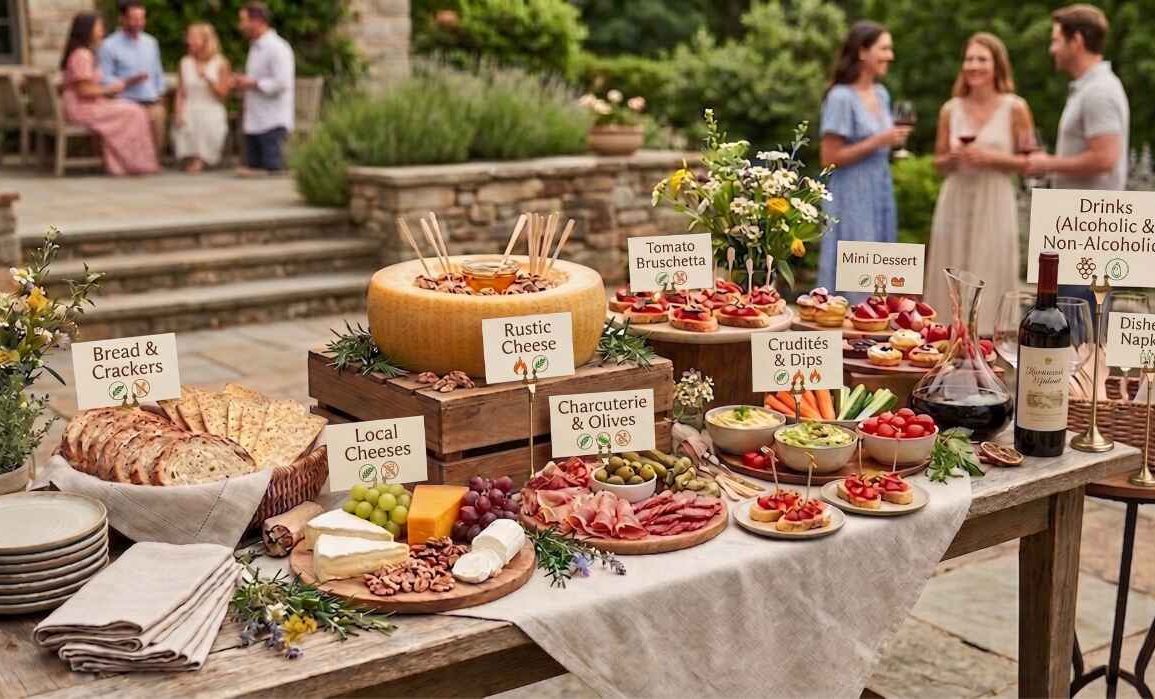
- Vertical Architecture: A table shouldn’t be flat. Use risers, wooden crates, inverted baskets, or even stacks of books hidden under the tablecloth to create different heights. This doesn’t just save space; it allows the eye to “scan” the entire spread in seconds.
- Logical Grouping: Place items in flavor families (the cheese corner, the charcuterie zone, the veggie garden). This creates a flavor map. Guests should instinctively know: “I grab my base here, and my toppings there.”
- Dietary Cues: In 2026, this is no longer a bonus—it’s a necessity. Use simple icons on your labels:
- 🌿 — Vegan
- 🚫🌾 — Gluten-Free
- 🔥 — Spicy This saves you from being a “human encyclopedia” and saves your guests from uncertainty or allergic reactions.
2. Simple Naming Ideas: Labels That “Sell” the Dish
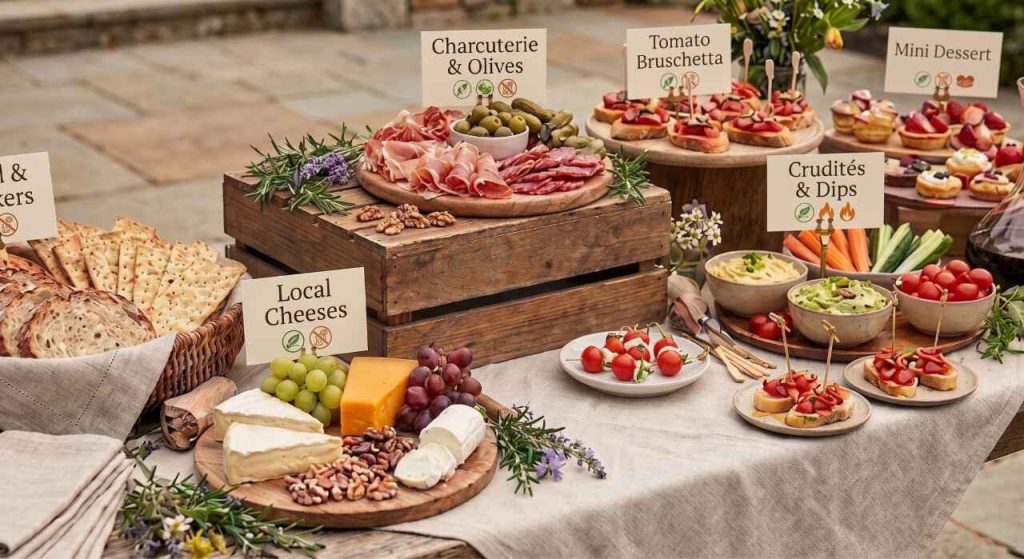
Food labels aren’t just informative; they are part of your storytelling. They set the tone for the entire evening.
- Themed Creativity: If your party is travel-themed, call a standard cheese board “A Stopover in the Alps.” If it’s a movie night, try “Leading Lady’s Appetizers.”
- Clarity Over Cleverness: Avoid names like “Meat Symphony No. 5.” Stick to “Maple-Glazed Pork.” People want to know exactly what they are putting in their mouths.
- Legibility Matters: Use chalkboards, mini-easels, or even kraft paper tags tied to bottles. The golden rule: use a font large enough to read without leaning in uncomfortably close to the food.
3. Recognizable Foods: The Psychology of Familiarity
Humans are subconsciously drawn to familiar shapes. Experimental molecular gastronomy is great for a Michelin-starred restaurant, but at a home buffet, guests crave comfort food.
- The “Classic with a Twist” Strategy: Take a familiar dish and add one premium detail. Instead of plain nachos, try nachos with a hint of truffle oil. Instead of a basic baguette, serve rosemary-infused crostini with sea salt.
- Predictability as a Perk: Slider burgers, caprese skewers, and ham rolls vanish first because guests know exactly what to expect. A guest is much more likely to grab something they can identify in 0.5 seconds.
4. Presentation and Flow: The Logistics of the Party
A buffet table is a route. If guests are bumping elbows, even the most delicious food will leave a literal bad taste in their mouths.
- The Plate-First Rule: Plates always go at the very start of the line. Cutlery and napkins always go at the very end. No one wants to juggle a plate in one hand and loose forks in the other while trying to serve themselves salad.
- The “Clean Hands” Principle: Unless you plan on having everyone sit at a formal table, avoid foods that require a knife. Everything should be “one-bite” style or easily handled with a pick or napkin.
- Separate the Bar: Never put drinks on the same table as the food. It creates a massive “traffic jam.” Move the bar or pitchers to a separate console.
- The Trash Strategy: Place a discreet but accessible bin for used picks and napkins slightly away from the food. A clean table is part of the presentation.
5. The “Showpiece + Crowd-Pleasers” Strategy
You don’t need to cook ten complex dishes to look like a pro. Follow the 80/20 rule.
- 20% — The Showpiece (The Star): This is the one spectacular dish that makes people pull out their phones. It could be a massive wheel of cheese filled with pasta, a whole baked side of salmon, a macaron tower, or a garden-decorated focaccia. This is your visual anchor.
- 80% — The Crowd-Pleasers (The Supporting Cast): These are simple, reliable snacks that can be bought or prepped in 10 minutes. Nuts, olives, crackers, sliced veggies with hummus. They provide bulk, keep guests full, and require zero “chef energy” from you.
Summary for the Perfect Host:
- Elevate the food: Use different levels/heights.
- Label everything: Including dietary icons.
- Keep it simple: Choose recognizable ingredients.
- Manage traffic: Food in one spot, drinks in another.
- Pick one “Star”: Don’t try to make every plate a masterpiece.
