COVID-19 WARNING! Please be careful and wear a mask! Click for more info

How Internet Culture Turns Films Into Memes and Redefines Their Meaning

In the age of digital saturation, a film no longer lives and dies at the cinema. Its real afterlife begins when it enters the wild world of internet culture — a space where no story stays untouched, and no scene is immune to repurposing. A character’s face might become shorthand for awkwardness. A dramatic quote could be recut into a joke. A still frame might say more on Twitter than the whole film did in two hours.

This process, where moments from cinema are turned into memes, is not just about humour or entertainment. It changes how we view films. It breaks the original structure of meaning and replaces it with something far more fragmented, collective, and fast-moving.

A film can take years to write, shoot, and edit. A meme can take seconds. But once that meme spreads, it often overshadows the original work, reshaping how a generation remembers the film, if they remember it at all.

The Meme as a New Language for Film

Memes are not just jokes. They’re a form of language. Built on visuals and captions, they communicate quickly, often across cultural and linguistic boundaries. What makes them powerful is that they don’t require full context. A person may never have seen The Godfather, but they understand “I’m gonna make him an offer he can’t refuse” because it has entered meme culture. It lives now as a reference, a reaction, a punchline.
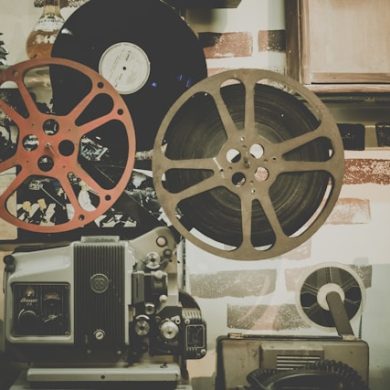
In this way, cinema becomes a source of raw material — a library of expressions, poses, dialogues, and moods that users can borrow, reshape, and reinsert into daily digital life.

Once something becomes a meme, it gains a second life detached from its original purpose. The image of Daniel Kaluuya in Get Out, staring wide-eyed and tearful, is no longer only a moment of psychological horror. It’s a go-to visual for panic, social discomfort, or even seeing your phone at 1% battery.

Examples Where Memes Redefined a Film’s Public Memory

Some films have been almost entirely rebranded by memes — or at least remembered in a radically different tone than they were intended.

1. Joker (2019)

Todd Phillips’ Joker was meant to be a slow-burning character study — dark, psychological, and tragic. But once Arthur Fleck’s dancing-on-the-steps scene hit the internet, it took on a new life. Users placed him dancing to every genre of music — from disco to grime — turning tragedy into absurdity. Others reframed him as a misunderstood “sigma male” icon. The memeification shifted public understanding away from loneliness and mental illness, towards political sarcasm or social commentary.

2. The Lighthouse (2019)

A surreal psychological drama turned cult hit. Yet many people know it not for its story, but for Willem Dafoe’s intense facial expressions, which became symbols of rage, confusion, or absurd passion. The monologues are turned into captions about arguing over takeaway orders or waiting for a delayed bus.
3. Titanic (1997)

Once remembered as a sweeping romantic epic, Titanic is now often referenced via memes: “I’ll never let go” being used to mock emotional overreactions or “draw me like one of your French girls” being used to comment on awkward confidence.
In each of these cases, memes didn’t just add humour. They altered the emotional weight the film carried for new viewers. They turned what was once sincere into something more layered — or even completely ironic.

Why Memes Thrive on Contradiction

Memes rarely use a scene at face value. They often work best when there’s a clash between the image and the text. This tension is what creates surprise, humour, or insight.

Take a dramatic moment, like someone crying in Requiem for a Dream, and place a caption over it about your Deliveroo order being late. The emotional charge of the image is undercut by the banality of the text. That contradiction is the joke.

This habit of flipping emotional context creates a kind of detachment. It turns sincere, weighty moments into tools for comedy. And over time, that irony becomes the default way many younger viewers relate to visual media. They see scenes not as part of a narrative, but as tools to express a feeling or idea quickly online.

The Death of the “Original Meaning”?

Film directors once held a lot of control over how their work was received. Press tours, interviews, and commentaries — all helped shape interpretation. But now, once a film is online, meaning becomes a free-for-all.

A director might spend months crafting tone, character arcs, and subtle themes. But a still from that film might end up on Reddit, reshaped into a punchline, meme, or sarcastic reaction. The context is gone. The author’s intention is irrelevant. The audience decides what it means now.

This raises questions about ownership and authorship. If a film is remembered mainly for how it’s used online, rather than what it originally tried to say, is that a loss or an evolution?

Some directors embrace this. Jordan Peele has commented that he finds the memeification of Get Out fascinating and even helpful for getting people into the deeper message. Others — like Martin Scorsese — have criticised modern viewing habits that reduce films to moments instead of letting stories unfold as a whole.

The Role of TikTok and Fast Edits

YouTube once led this charge with “YTPs” (YouTube Poops), fan edits, and joke remixes. Now, TikTok has accelerated it tenfold.

Scenes are clipped, sped up, slowed down, lip-synced, re-cut with Gen Z humour, or mashed with trending audio. Films like Twilight and Shrek, once ridiculed, have been reclaimed ironically. They are now popular not for the reasons they were originally made, but because people enjoy quoting them, reacting to them, or laughing with and at them simultaneously.

A film doesn’t have to be new. It just has to be remixable.

Is This the Future of Cinema Engagement?

We’re not going back to a time when films only lived in cinemas or review sections. Today, a film might reach someone not through a trailer or screening, but through a meme. That might be their entry point — or their only contact.

And while that may frustrate some traditionalists, it also speaks to how wide a film’s reach can now be. A single line, look, or expression might travel further than the film ever could through conventional marketing.

This doesn’t mean films are dying. It means they’re evolving into shared digital objects — part of how people talk, joke, protest, or connect.

Final Thoughts

Memes are not destroying film culture. They give old films new audiences and turn forgotten scenes into cultural landmarks.

In this meme era, films don’t just tell stories — they become stories. Not always the stories they set out to tell, but stories reshaped by those who watch, remix, and share them.

If nothing else, it proves that cinema, like culture itself, doesn’t stand still. And maybe that’s the most cinematic idea of all.

Want to walk through the valley of famous movies on which you grew up? NYC Cinema Guide is made for you!